Restoring mobility with total and partial knee replacement
Knee replacement is one of the most effective operations in orthopaedic surgery, offering lasting relief when arthritis or joint damage limits your day-to-day life. Mr Paul Jermin performs a high volume of both total and partial procedures each year with low complication rates & high satisfaction rates.
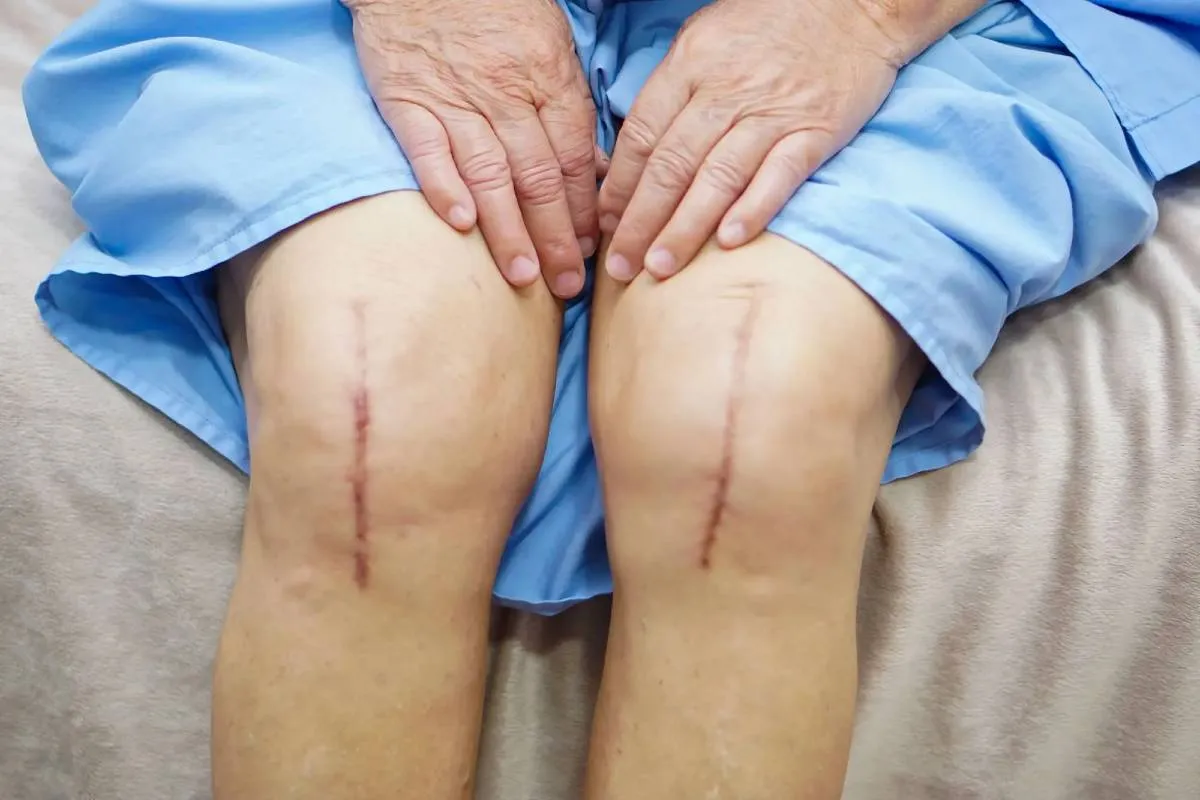
Knee replacement surgery (arthroplasty) removes worn or damaged joint surfaces and replaces them with a precisely engineered implant designed to move smoothly and restore function. Mr Paul Jermin performs over 130 knee replacements each year – more than twice the national average.
Total knee replacement is recommended when arthritis or damage affects the whole joint. The joint surfaces of the thigh bone, shin bone, and (generally, but not always) kneecap are replaced with metal and plastic components, restoring alignment and eliminating pain.
Partial knee replacement replaces only the damaged section of the joint, preserving healthy bone and tissue. Recovery is often faster than total replacement, and outcomes can be excellent when the right patient is selected. There is some controversy as to whether partial knee replacements last as long as total knee replacements but the evidence suggests that if you have it performed by an experienced surgeon doing reasonable numbers per year, they can last as long as total knee replacements.
Surgery is only recommended when non-surgical options have been fully explored and when it is clearly in your best interest.
Mr Jermin has been performing high volumes of knee replacements for over 10 years with very low complication rates.
It is important to understand that, whether it is partial or full, a knee replacement is a big operation and getting over one can be a challenging process. The first few weeks are, generally, quite unpleasant. It takes most people 2-3 months to feel better than they did before the surgery. The majority of the recovery takes place in the first 6 months but they take years to fully ‘bed in’. Everyone is different and some people recover differently.
A successful knee replacement is primarily aimed to help the pain in your knee. They very rarely give people back a normal knee. More often than not, they improve things significantly (such as pain walking, rest pain, night pain and getting off walking sticks/crutches.) People who have their knee replaced often say it feels odd, sometimes you may get an ache around it and it may ‘click & clunk’ but for someone with severe knee arthritis, it is the gold standard treatment. It is entirely normal to lose the feeling on the outside of your knee after a knee replacement.
Despite this, there are a proportion of people who remain unhappy after a knee replacement (between 5-10%), it is important to appreciate this before undertaking surgery. As a community, we are trying to better understand this but there is no surgeon in the world who can, currently, accurately predict who is going to do well or poorly following their knee replacement.
There are complications associated with this big operation, you will be provided with an information booklet that outlines these. It is impossible to list all complications from knee replacements but the main ones to consider are: infection, damage to blood vessels and nerves, pain / CRPS, scar, swelling, fracture, dislocation, blood clots, wear, loosening, death & failure.
Paul can often perform knee replacements as a day case and it is unusual for someone to spend more than one night in hospital after their procedure.
Paul uses the SAIPH & Attune total knee replacement systems. The Oxford partial knee replacement & the Gender patello-femoral joint replacement. All of these have been around for long enough to know that their outcomes are excellent & do not have any of the concerns that have been raised about other knee replacement systems recently.
The younger you are, the higher your risk of ‘wearing’ your knee replacement out is, Mr Jermin will discuss this with you but if you are much over the age of 55-60, there is an excellent chance it will last you the rest of your life.
Is this treatment for you?
Your Journey
Mr Jermin will discuss your symptoms, review any previous imaging, and examine your knee to understand how it is affecting your daily life.
Weight-bearing X-rays assess the extent of joint wear and alignment, helping determine whether total or partial replacement is most appropriate.
A personalised surgical plan is agreed with you, including which type of replacement best suits your anatomy and activity level.
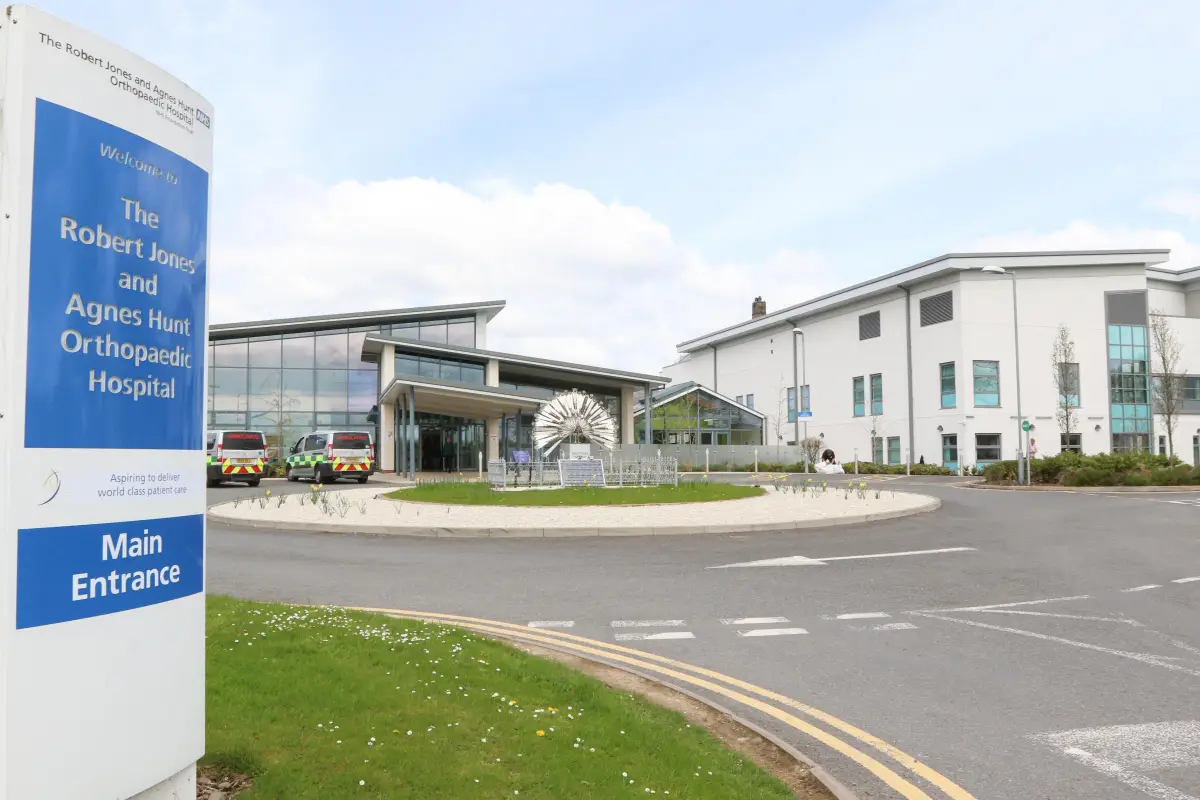
Surgery is carried out at either RJAH Oswestry (NHS) or Spire Yale Hospital, Wrexham (private), with the procedure and recovery explained in full beforehand.
A structured rehabilitation programme supports your return to mobility, with progress monitored throughout.
Mr Jermin
130
knee replacements per year
200
knee arthroscopies per year
30
ligament reconstructions per year
25
osteotomies per year
25
cartilage procedures per year
3
injection treatments offered
15
years of specialist knee experience
2
consultant hospital posts
Hospitals